Penang Energy Framework (PEF)
Towards a Sustainable, Energy-Resilient and Low-Carbon Penang
PEF at a Glance
- Established: 2020 (PEF Taskforce)
- Launched: 2024
- Target Year: 2030
- Focus Areas: Renewable Energy (RE) & Energy Efficiency (EE)
Background
The Penang Energy Framework (PEF) is the State’s strategic roadmap for advancing a secure, sustainable, and low-carbon energy future. Developed to accelerate the adoption of Renewable Energy (RE) and Energy Efficiency (EE), the Framework establishes a comprehensive set of targets and action plans to guide Penang’s energy transition through 2030.
As a collaborative initiative spearheaded by the State Exco for Infrastructure, Transport, and Digital, with Penang Green Council serving as the Secretariat, the Framework was developed through extensive consultation with government agencies, local authorities, research institutions, industry representatives and professional bodies. This multi-stakeholder approach ensures that the Framework is evidence-based, practical, and responsive to the evolving energy landscape.
The PEF, launched in 2024, aligns with Malaysia’s national energy aspirations, including the National Energy Transition Roadmap (NETR), National Energy Policy, Energy Efficiency and Conservation Act (EECA), and other relevant federal initiatives. By strengthening policy coherence between the State and Federal Governments, the Framework provides a coordinated platform to accelerate renewable energy deployment, improve energy efficiency, enhance energy resilience, and support sustainable economic growth in Penang.
Beyond serving as a policy document, the Penang Energy Framework provides a foundation for coordinated implementation, cross-sector collaboration, capacity building, and continuous monitoring to ensure the successful delivery of Penang’s energy transition objectives.
About Penang Energy Framework (PEF)
Vision
To establish Penang as a sustainable, energy-resilient, and low-carbon state through accelerated adoption of renewable energy, enhanced energy efficiency, and collaborative energy transition initiatives.
Mission
To provide a strategic framework that enables coordinated action among government agencies, industry stakeholders, communities, and technical partners to advance renewable energy deployment, improve energy efficiency, and support Penang’s transition towards a sustainable energy future.
Objectives
The Penang Energy Framework (PEF) aims to:
- Establish state-level Renewable Energy (RE) and Energy Efficiency (EE) targets and strategic action plans to support Penang’s energy transition.
- Accelerate the adoption of RE and EE initiatives across key sectors, including public buildings, industries, commercial developments, and communities.
- Strengthen collaboration between state agencies, federal agencies, utilities, industry players, research institutions, and professional bodies to address implementation challenges and opportunities.
- Develop practical strategies, guidelines, and support mechanisms to facilitate wider adoption of renewable energy and energy efficiency solutions.
- Promote pilot projects, capacity building, and knowledge sharing to demonstrate scalable solutions and best practices.
- Support data-driven monitoring and continuous improvement of Penang’s energy transition progress.
Strategic Alignment
The Penang Energy Framework supports and complements Malaysia’s national energy transition agenda and global sustainability aspirations through alignment with:
- Penang2030
PEF contributes towards Penang2030’s vision of a “Family-Focused Green and Smart State that Inspires the Nation” by supporting sustainable development, climate resilience, and green growth initiatives.
- National Energy Transition Roadmap (NETR)
PEF supports Malaysia’s transition towards a low-carbon energy system through increased renewable energy adoption, improved energy efficiency, and enhanced energy sustainability.
- National Energy Policy 2022-2040 (NEP)
PEF aligns with national priorities to ensure a secure, sustainable, and affordable energy supply while supporting economic competitiveness and environmental responsibility.
- Energy Efficiency and Conservation Act (EECA)
PEF supports the promotion of energy management practices, efficient energy utilisation, and improved energy performance across key sectors.
- Sustainable Development Goals (SDGs)
PEF contributes towards global sustainability commitments, particularly:
Affordable and Clean Energy
Promoting access to sustainable and efficient energy solutions.
SDG 7
Industry, Innovation and Infrastructure
Supporting sustainable infrastructure and innovation.
SDG 9
Sustainable Cities and Communities
Enhancing urban sustainability and resilience.
SDG 11
Responsible Consumption and Production
Encouraging efficient resource utilisation.
SDG 12
Climate Action
Supporting climate mitigation and low-carbon development.
SDG 13
PEF Taskforce
The Taskforce serves as the principal multi-stakeholder platform driving the implementation of Penang’s energy transition agenda. It provides technical expertise, policy coordination, and institutional support to ensure the successful delivery of the Framework’s objectives and action plans.
Members of the PEF Taskforce
EXCO for Infrastructure, Transport and Digital
Penang Green Council (Secretariat)
State Economic Planning Division (BPEN)
Local Government Division (KT)
Public Works Department (JKR)
Penang Island City Council (MBPP)
Seberang Perai City Council (MBSP)
Penang Development Corporation (PDC)
Tenaga Nasional Berhad (TNB)
Penang Institute (PI)

Pertubuhan Akitek Malaysia (PAM)
Federation of Malaysian Manufacturers (FMM)
Malaysia Green Building Council (MGBC)

The Institution of Engineers Malaysia (IEM)
Malaysian Institute of Planners (MIP)

The Free Industrial Zone, Penang Companies' Association (FREPENCA)
Plan Malaysia
PEF Principal Advisor (2026–2027)
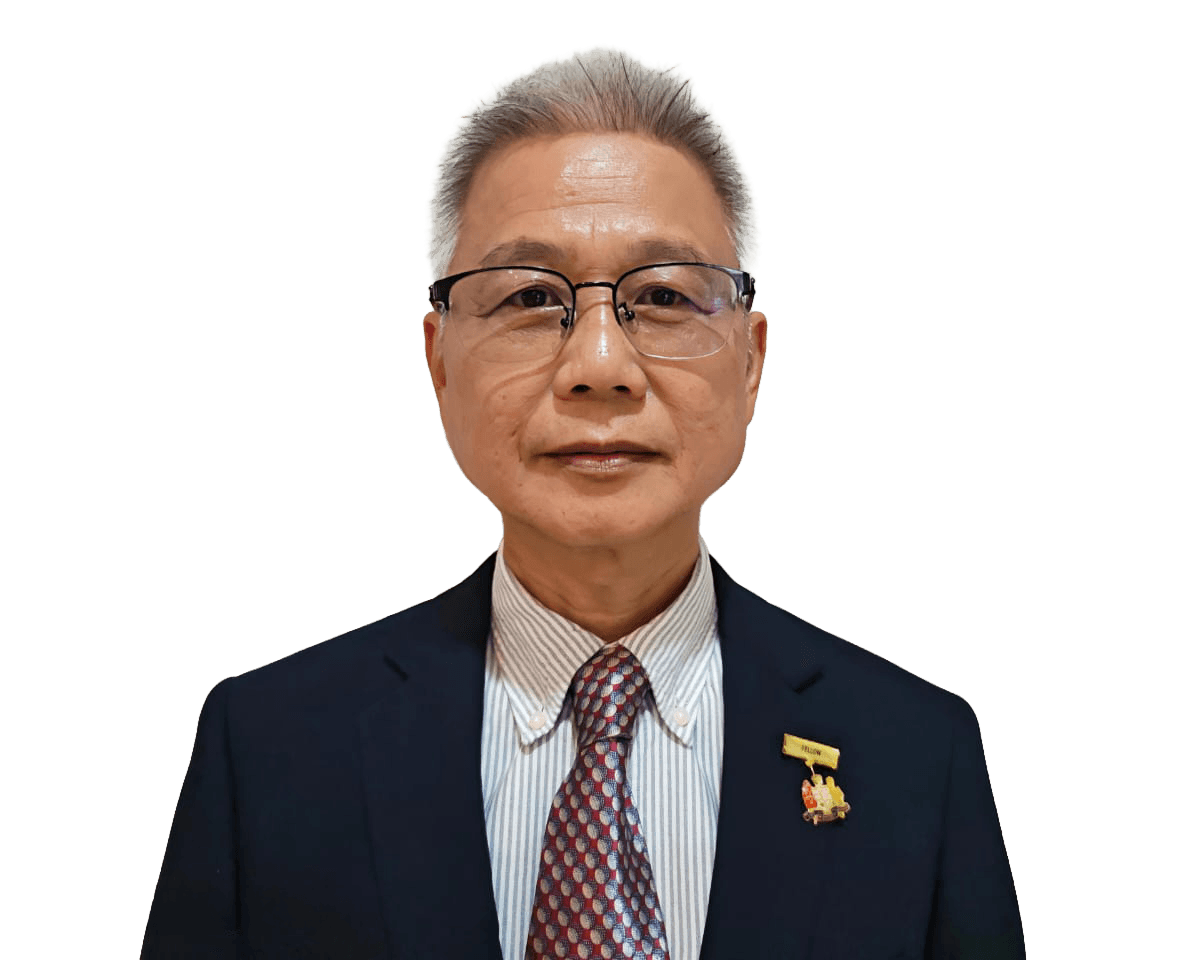
Ir. Chau Hoo Wan
Ir. Chau Hoo Wan is a Professional Engineer with Practising Certificate (PEPC) and over thirty years of experience in electrical engineering, renewable energy, and industrial engineering. He holds a Bachelor of Science (Honours) in Electrical/Electronic and Mechanical Engineering, and a Master of Science (Honours) in Power Electronics Engineering from South Dakota State University (USA), where he was awarded the University Scholarship and recognised on the All-American Deans’ List.
He is an APEC Engineer, ASEAN Engineer, and holds professional certifications including SEDA Grid-Connected Photovoltaic (GCPV), MGBC Green Building Industrial Facilitator (GBIF), ST Power Quality Auditor (PQA), and Registered Electrical Energy Manager (REEM). He is actively involved in engineering and sustainability initiatives through The Institution of Engineers Malaysia (IEM), the Board of Engineers Malaysia (BEM), and the Penang Green Council.
With extensive expertise in renewable energy, particularly solar photovoltaic (PV) systems, Ir. Chau has led numerous engineering, consultancy, and innovation projects, including patented solar PV mounting technologies. As Principal Advisor to the Penang Energy Framework (PEF), he provides strategic and technical guidance to support the implementation of Penang’s renewable energy and energy efficiency agenda.
Resources & Downloads
For further details, please contact us at 04-250 3322 or email to info@pgc.com.my.